Sunday, March 15, 2015

Worksheets Don't Grow Dendrites Chapter 5 {Graphic Organizers}

Michelle from Fabulous in First is hosting today's chapter about Graphic Organizers.


I know graphic organizers are important because they help students visually organize information, and the Ms. Tate reinforced this concept citing that both left and right-brained students can benefit from graphic organizers.  As a third grade teacher, I used and encouraged students to use organizers quite a bit, but for some reason in kindergarten I don't seem to use them as much.

I've used Venn Diagrams occasionally when comparing stories and have used webs when doing research with students.  When I read that all students can benefit from the use of graphic organizers, I knew it was important to make more of an effort to incorporate them in our classroom.

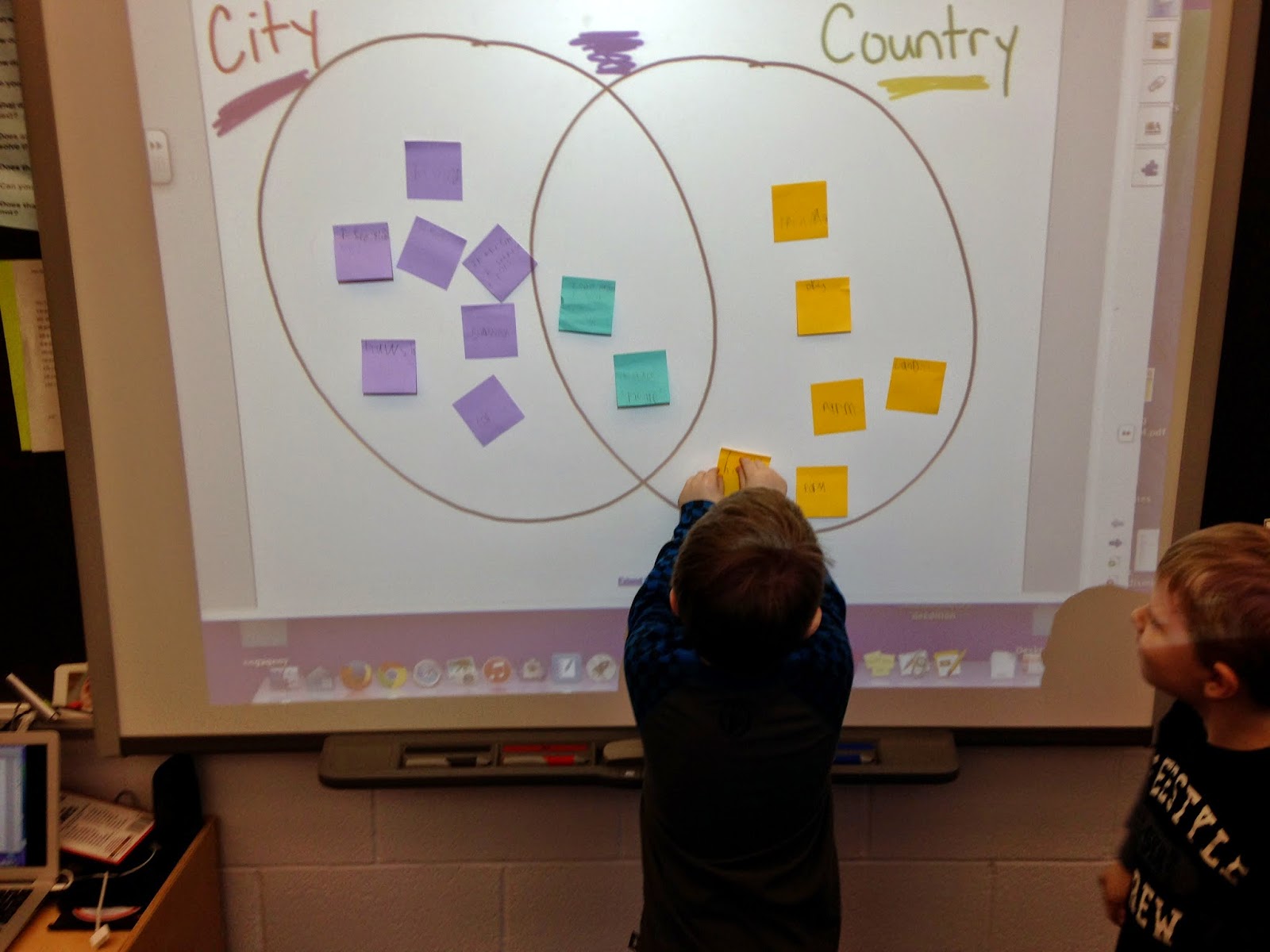
This week we began a study of city vs. country.  I decided this was the perfect time to give a Venn Diagram a try.

Students started off by writing things they could find in the city/country/both on Post-Its.  Each section of the Venn Diagram had a specific color of Post-It.  I did this so we could see how well we sorted (a little self-assessment). Meanwhile, I drew a Venn Diagram on the SMARTboard.  My kiddos were seated in groups of 4-5 and were encouraged to chat before writing on/posting Post-Its.


Students brought their Post-Its up as they wrote characteristics of each place.


After about 5 minutes of posting Post-Its, we came back together as a group.  We looked at each Post-It and grouped the ones that were the same.  We then discussed whether or not that is where the Post-Its actually belong.  Once we had all the Post-Its where they belonged, we could easily see how well we did sorting the characteristics.

My kiddos loved this activity, and it was an easy way for them to sort the information.  I'm looking forward to using more graphic organizers in my classroom in the future!

Thursday, March 12, 2015

Bunny Directed Drawing

I wanted to write about this one sooner rather than later so you could make these too!

We've been doing quite a bit of directed drawing in my room this year.  I guess "quite a bit" is a relative term.  Since I did zero last year, doing it more than once seems to be "quite a bit"!

I found this guy thanks to Pinterest (where else would I look after all!).  I love her directions because they are so easy for a less than artistic person such as myself to follow.  We did the reindeer from this site in December and they were awesome.


In our last couple professional development meetings, we've been talking about getting the kids to really listen to what you are saying/what is happening around them and how this ties to their language and phonological awareness development.  When we start a directed drawing, I always ask the kids why we are doing it, and they know it is so they can listen and follow directions.  One little guy said "because if we don't listen to what you say, it won't look like a rabbit!"

After the directed drawing portion, we had a discussion on what color a rabbit might be in the wild or as a pet.  My kiddos chose their colors and used crayons to color on this one.  We painted the background with watered-down liquid watercolor.  Choices of pink, blue and green were given.


I love the finished look the mats give these.  Each bunny is unique, but all the kiddos must have been listening because we have a class set of bunny art.  They are hanging in the hallway outside our room.  We've received many compliments already!


Tuesday, March 10, 2015

Book Study: Worksheets Don't Grow Dendrites Chapter 4 {Games}

I'm linking up with Katie from Queen of the First Grade Jungle to share my take on Chapter 4, which was all about using games in the classroom.  My students love playing games in the classroom.

We love quick skill practice games like "Zap" or "Bang".  These can be used with cards or popsicle sticks and are generally quick to prep and easy to store.

Around Thanksgiving we had "Family Game Night" in my classroom.  Families were not invited, but I called it Family Game Night as we are a classroom family.  Students learned to play Trouble, Connect 4 and Candy Land.  I modified the Candy Land cards using ideas from Mel-D- Seusstastic.  She has a wide variety of different Candy Land cards available.   We've done everything from sight words to addition and subtraction facts.

My students also love the strategy game shared by Miss DeCarbo.  I have since recreated similar games using different seasonal clip art and themed counters.  I like these because they make kids think and they are quick, but students want to play them again and again.

I created a St. Patrick's Day version for you!  You can download it here.


One of the suggestions in this chapter was to allow students to create their own game.  The last couple weeks we've been playing I Have, Who Has in class.  I have a set of phonemic awareness I Have, Who Has games focusing on rhyming, matching initial sounds, and matching ending sounds.  I decided to take on this little adventure of allowing students to create a game using this format.  It was a bit of a learning curve for me to get the words in the correct place, but they were SO excited to get to make their own game!   Once the game is complete, a student was absent from this group and he needs to finish his set of cards, it will be added to our reading center for our class to enjoy.

The rhyming words are on the back of each sheet.  These will be laminated and cut into cards.

As the title of the book states, this chapter really reinforced for me that worksheets have a place in my classroom, but they shouldn't be the way all learning occurs.  Students love games, and when actively engaged in them, are learning more than just the academic concept you've included in the game.  My goal is to incorporate more games, and more specifically, more student-created games, in my classroom, especially during reading center time.

How do you incorporate games in your classroom?  What are some of your students' favorite games?

Monday, March 9, 2015

2-D Shape Castles

Last week I wrote about "academic art" in response to reading a chapter in the book Worksheets Don't Build Dendrites.  You can read that post here.

When searching for ideas that were a little more than your basic 2-D shape work, I came across a pin by an art teacher for making shape castles.  I cut many 3x3 from brightly colored construction paper then cut these in half to create triangles.  The triangles were put at the art center with black construction paper.  Students were given the direction to create a castle using the triangles.  I told them that they can use triangles to form squares and that they should try putting them together in different ways to see what they could make.

Here are a few examples of student work:


When we move into 3-D shapes, I plan to have students make castles using 3-D shapes as well so they can see the differences between 2-D and 3-D shapes.  I'm hoping that them seeing 2 things that they made side-by-side it will help them see what makes something 2-D and what makes something 3-D.  We'll be back with that project in a few weeks!

What do you do to engage your students in 2-D shapes learning?

Sunday, March 8, 2015

In My Community: A Little PBL

We had a unit on community as part of our curriculum.  Ideally I would have incorporated maps into this unit as well, but too many snow days and needing to move on with the rest of the K team didn't make this possible. I have plans for maps later in the spring.

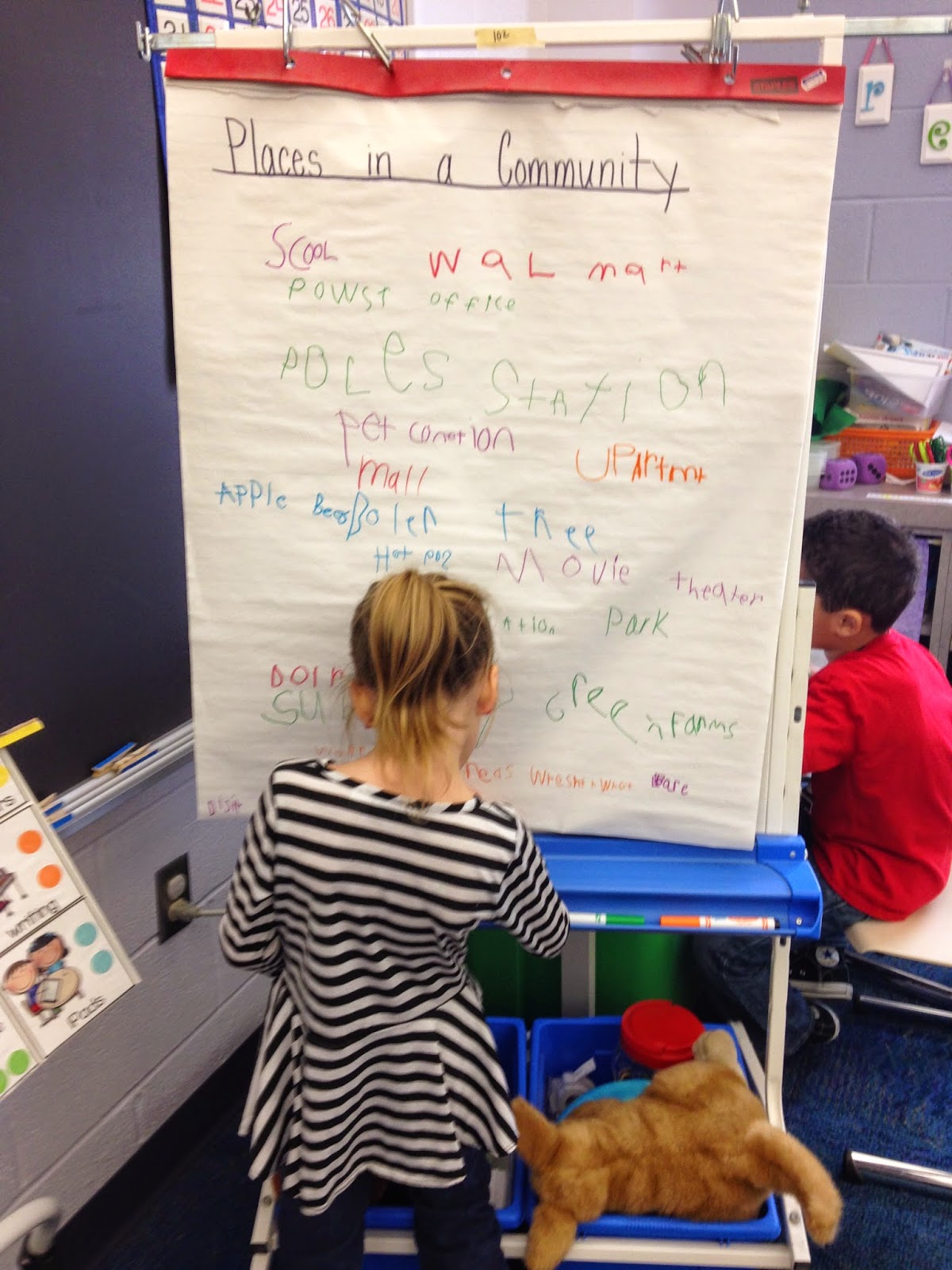
We started off our study of community by listing places in a community and more specifically, in our community.  After our initial conversation, students were able to add to the list throughout the day as they thought of other places.


Students then worked in 4 groups to create a community.  They began the project in their groups by making a list of places they needed to have in their communities.


After making their list, kiddos set to work making their communities.  I provided a large piece of white poster board, squares and rectangles in various colors of card stock and long rectangles of black paper (for roads).  I also had 1/2 sheets of construction paper available for grass, water and parking lots/driveways.  Crayons, scissors and glue were also available.

The roads were put down first to lay the foundation for the community.


After creating their buildings, my kiddos began to put their communities together.  Our awesome literacy coach showed me a way to get the buildings to stand up.  Students bent a paperclip into an "L" shape then taped it to the back of each building.  The taller buildings took 2 paperclips to stand up.
The buildings were taped to the the poster board to prevent them from being moved around the when the communities were displayed in the hallway.


Completed communities were displayed in the hallway for just over a week.  Kiddos created a name for their community and a welcome sign to display with the community.  Families were invited to visit during the school day or after school to see their kiddos' work.  A "guest book" was available for them to leave comments for students.

Welcome to Car City.  You can see the paperclip stand-up "trick" in this picture.  The gray parking lot is behind the mall :)
Welcome to Blue City.  This crew made just add family members and animals to their community.  
Welcome to Pondton.  Sorry for the blurry picture on this one.  This group had a field with animals in the middle of their community.

Welcome to Big City.  It definitely was a "big city"; pretty much every available space was filled with a road or a building!

Saturday, March 7, 2015

Book Study: Worksheets Don't Build Dendrites Chapter 3 {Field Trips}

I'm linking up with Deedee from Mrs. Wills' Kindergarten and I'm excited to share my learning from Chapter 3 with you.  I love a good field trip!  Yes, they can be stressful to plan and organize, keep track of the kids and make sure everything goes smoothly, but they are so worth it for our kiddos!


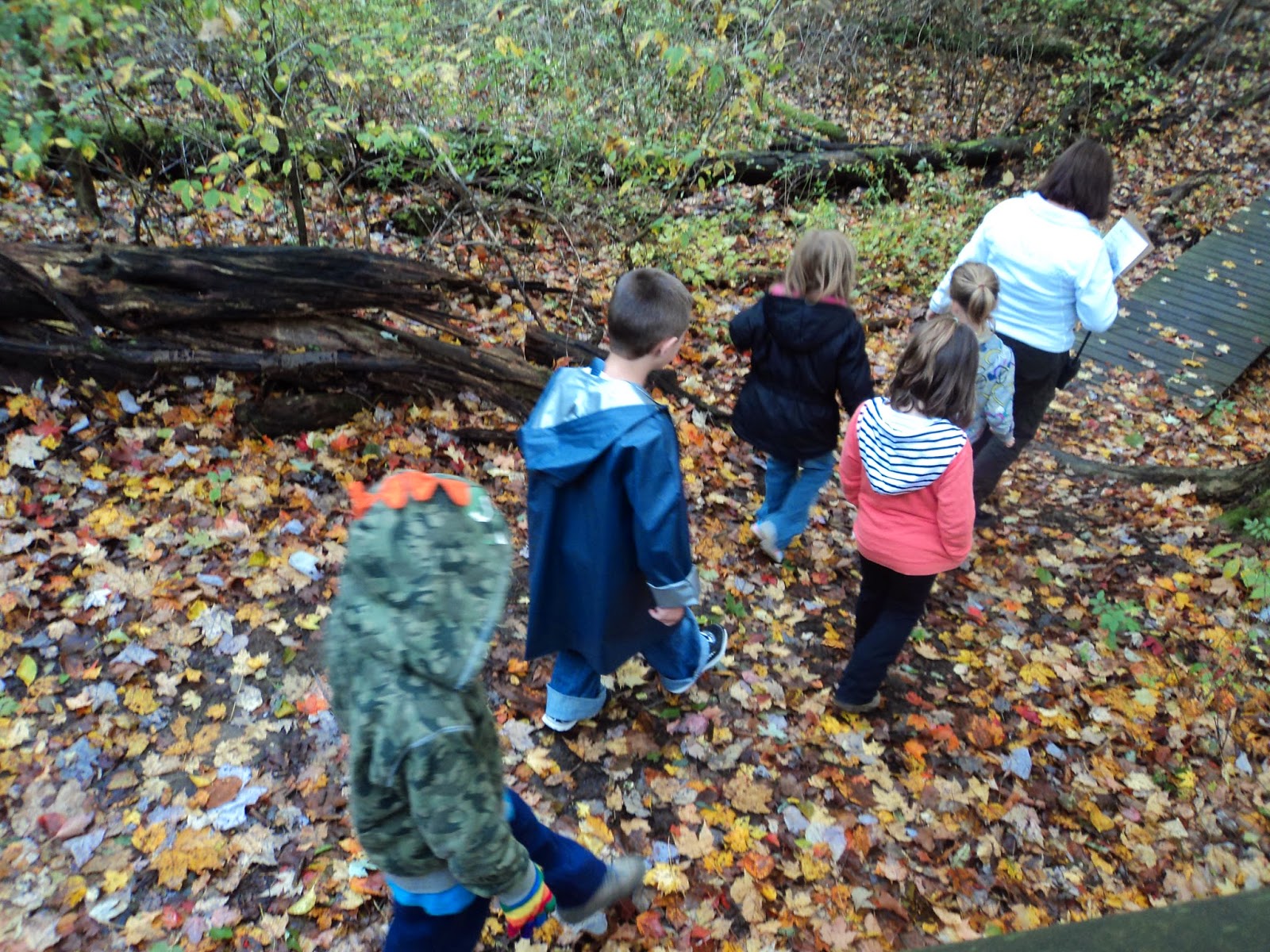
I know field trips are a fantastic way for students to learn. In our district, field trips are a grade level/district decision.    One field trip our kindergarten classes go on each year is a trip to the Nature Center run by our local college.  We are an urban district, so this trip to the Nature Center is some of our students' first trip to the country.  It is always interesting to hear their reactions.


The last 2 or 3 years, we have visited a house about 3 blocks from school that is a former Underground Railroad house.  We visited different rooms in the house and did lessons on long ago and today.  It has not been mentioned this year, but I'm hoping that we can continue this trip since it is in walking distance.


In the past, we have also walked to the fire station, local library and a grocery store for a tour.  These trips weren't consistent from year to year.  The last 2 years we have visited our local college for a tour and lunch in the cafeteria.  The goal of that trip was to get our kiddos excited about college at an early age.


I've used DonorsChoose to sponsor field trips to a Children's Science Center about 45 minutes from school as well as a trip to the Cleveland Zoo.  Both of these trips took place on a Saturday with parents transporting their own students.  I used DonorsChoose to pay for each child and for 1 adult per family.  On average, I had around 50% of my families attend.

For the past 4 years, donors on DonorsChoose have also sponsored a trip to our local "paint your own pottery" studio.  This is an evening trip that parents have to transport their child to.  My kiddos who come love this experience every year!


In September/October, my team has been inviting our students to join us at the apple orchard.  We usually do this on a Sunday afternoon and in the past 8 years, it has been cold and/or rainy most times. The trip goes really well with our fall unit.  Students and families can pick apples and pumpkins after the short presentation by the orchard staff.


So what do I want to learn from this chapter?  I would love to give my students even more experiences.   I would like to look into some virtual options to "take" my kiddos students I can't actually take them out of the classroom.  I'd love to hear your ideas to bring my students experiences.  How do you bring real world learning to your students?

Wednesday, March 4, 2015

Worksheets Don't Build Dendrites: Chapters 1 & 2

I'm so excited to be joining in the book study on the book Worksheets Don't Build Dendrites by Marcia Tate.  Kickin' It In Kindergarten is hosting the first two chapters.  I'm a little late to the party, but better late than never, right?


Chapter 1 was all about brainstorming and discussions in the classroom.  I know many others commented on their classrooms not being quiet places.  There is certainly a lot of chatter going in my classroom too.  I have no problem with noise; I love when they learn from one another.  I struggle when it gets loud and wish it would quiet down, but I remind myself frequently that it is productive noise and that makes it more ok.

Some ways my students engage in conversation are through think-pair-share, partner reading, reading centers and reader's theater.  I love listening to the different things they reason through with their friends.  Some of my favorite learning from them comes during our read aloud each day. Last week we were reading a book about spring and it said that the character went around the corner to look for spring.  I asked my kiddos to think about whether or not you could go around the corner to find spring. One child went into a scientific explanation of spring citing the rotation and tilting of the Earth and sun while another simply said, "It can't turn into spring until God makes it happen."  Out of the mouths of babes!  If I had stopped their conversation, these things wouldn't have happened.

The last couple years I've done quite a bit of Project Based Learning.  This is a wonderful way for students to collaborate and talk to one another.  I encourage them to solve problems within their groups on their own before coming to me.  They do a great job learning from and with one another.


One thing I'd like to add are more partner games and meaningful conversations around math.  I've done better in the past with incorporating talk in Language Arts, but I know that they can learn so much from one another in math too!

Chapter 2: Drawing and Artwork
This is our first year not having an art teacher in our building.  Our art teacher retired last year and our district did not replace her.  Art is not necessarily my strength, in fact, typically it is a struggle for me, but we are making it work!  Pinterest and TpT have definitely made this easier!

Directed drawing is very excited for me.  I love when directions are given that I am able to follow and share with my students.

At the beginning of the year, we tried some collaborative art.  I split the class into 2 groups and give them cups of paint and brushes.  The task was to create art together using circles.  It was great for conversation and for art.  My kiddos love this project, and it was great to see how unique the 2 different groups made their work!

Each week during center time, we have an open-ended art center.  I have one 'suggested' activity that typically goes with our theme.  Beyond that, materials are available for students to just create.  This week, we are beginning to study 2-D shapes.  I put out triangles and suggested that students make a castle out of the triangles.  I told them that they could try to make squares using either 2 or 4 triangles.


My students are so excited when they get to do art, and I know I need to incorporate it more in our classroom.  I'd love to incorporate more art into our everyday.  "Quick draws" where students take a couple quick minutes to draw what they learned/what we're talking about.  At the beginning of the year, I had planned to have students illustrate vocabulary words with a partner.  I haven't done that and I think it would be a great way to add in more of what my students enjoy.

I'd love any suggestion you might have on including more art and conversation in my classroom!